First Person vs Close Third Person: Who Controls What the Reader Knows?
First person vs close third person changes how readers receive a character’s thoughts, blind spots and surprises, helping you choose the right narrative distance.

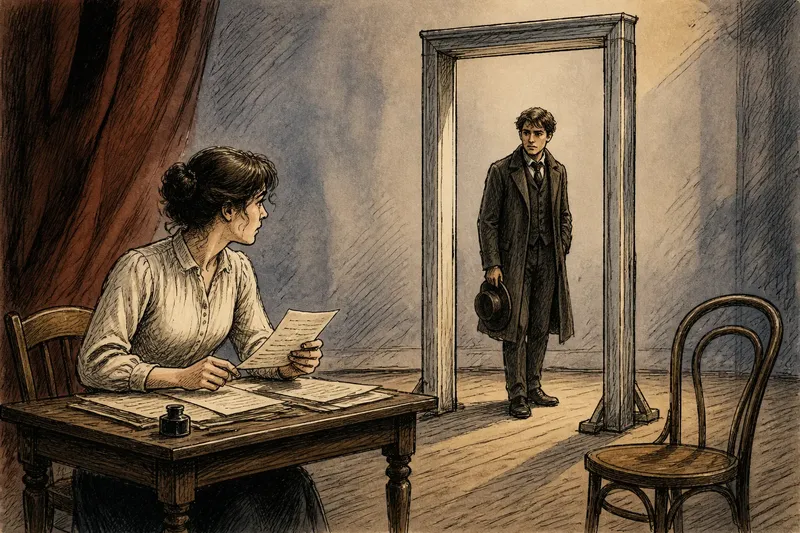
First person vs close third person can change a scene before anything happens: “I heard the latch turn” makes a speaker responsible for the account, while “Mara heard the latch turn” keeps the prose close to her without making her the narrator. The useful question is not just which pronoun appears. It is who owns each piece of information, and how clearly the reader can see that ownership.
Think of viewpoint as a pane of glass between the reader and a character. First person puts the character’s voice on the glass; close third lets the narration borrow the character’s attention, vocabulary and assumptions. Both can bring a reader close, but they leave different fingerprints on the prose.
First person makes the act of telling part of the story
In first person, a narrator speaks as “I”, either while events unfold or while recounting them later. The narrator’s words, judgements and omissions shape what reaches the reader. Even a simple description carries the flavour of a particular mind.
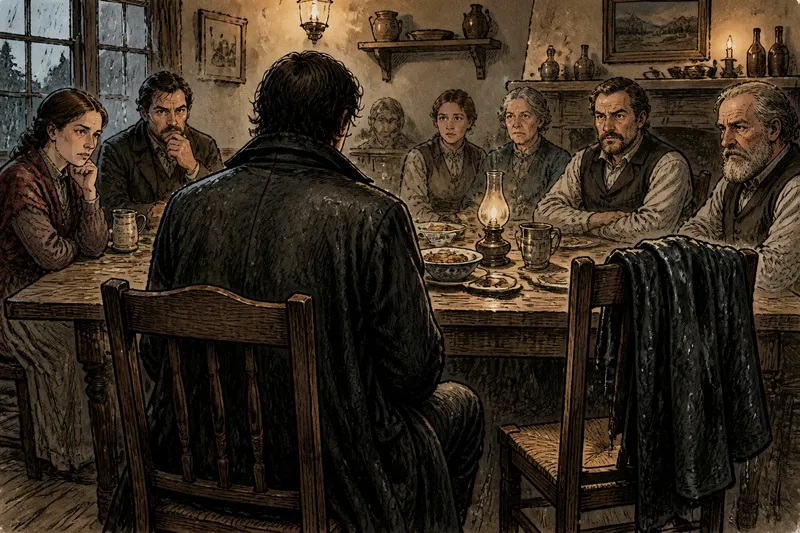
A narrator might notice the rain darkening a visitor’s cuffs, dismiss a pause as politeness, then insist that nothing seemed unusual. The details and the dismissal sit together; readers can weigh the gap between them. That gap can create suspense without requiring the narrator to lie.
First person limits direct knowledge to what the narrator has perceived, remembered or learned. If another character is alone in a locked room, the narrator needs a credible source before reporting what happened there. A conversation, letter or later discovery can supply that route; without one, the scene risks giving the narrator knowledge they cannot possess.
A narrator looking back can also know more than their earlier self. The older voice might hint at a consequence the younger character cannot yet understand, or keep the account close to that earlier confusion and reveal the meaning later. The pronoun stays the same, but the distance between the experiencing self and the telling self changes.
Close third lets narration borrow a character’s mind
Close third uses “he”, “she” or “they” while keeping attention near a particular character. “Mara heard the latch turn” names her from outside, yet the sentence can stay within the limits of what she hears. The narration may also take on her vocabulary and emotional colouring without adding “she thought” to every line.
That arrangement can move between sensation, action and thought with little fuss. “Of course. Another visitor who had forgotten how doors worked.” The thought can appear in Mara’s idiom while the surrounding narration remains in third person.
Close third is not automatically all-knowing. If the narration stays with Mara, it should not casually report what another character secretly wants. The narrator can describe the other person’s clenched jaw or hurried glance, but a claim about private motives needs to be presented as Mara’s inference or supported by a deliberate widening of perspective.
Small shifts in phrasing show who is speaking. “She thought the note looked familiar” reports a thought with some distance. “That handwriting again. Hadn’t she burned the letter?” lets the thought enter the narration directly. The second version often feels closer, and it gives the character’s idiom more control over the prose.
The information boundary matters more than the pronoun
For any scene, ask what the reader can know at that moment. Can they hear only what the focal character hears? Can they tell a belief from a confirmed fact? Does the narration know something the character does not? Those questions identify the viewpoint more reliably than counting “I” and “she”.
First person makes the reporting voice obvious. Close third can make the boundary subtler: a phrase such as “the obvious excuse” may be the character’s verdict, not a neutral fact. If readers cannot tell whose judgement they are hearing, an intended ambiguity can look like an accidental slip.
Imagine Mara finds a damp envelope beneath her flat’s door and hears footsteps on the stairs. In an invented first-person version, she says, “I knew it was from Ellis,” before opening it; the certainty belongs to her voice, so the reader can question its basis. In an invented close-third version, “Ellis’s envelope, surely. Mara tucked it into her pocket” keeps the guess close to her while the narration reports her action. The event is unchanged; what changes is whether the assumption arrives as Mara’s spoken account or as thought-coloured narration.
Choose the form that gives the scene its right distance
First person suits stories where the narrator’s manner of telling is part of the drama. A distinctive voice can make self-presentation, selective memory and interpretation central to the reader’s experience. It is especially useful when the story should keep asking what this narrator understands, what they disclose and what their account leaves unsettled.
Close third suits a story that wants intimate access without making the character a storyteller. It can follow a character’s sensations and thoughts while leaving room for the narration to describe action plainly. That balance can help a scene stay close without making every detail sound like a deliberate confession.
Neither form is inherently more intimate or more truthful. A first-person narrator can feel distant if the voice explains everything from a safe remove; close third can feel intensely personal when its details and rhythms belong to the focal character. The useful choice is the one that makes the intended distance clear and sustainable.
Stories with several focal characters can use close third by giving each character a clearly signalled scene. First person can also accommodate multiple narrators, but each needs a distinct voice and a plausible reason to know the material they tell. An unmarked change in whose mind the prose can enter may leave readers unsure whose belief they are meant to trust.
How do first person and close third handle tricky viewpoint choices?
Can close third include a character’s exact thoughts?
Yes. Direct thought can appear in the character’s idiom without a tag such as “she thought”. Keep the shift clear, especially when spoken dialogue or a differently toned narration sits nearby.
Can a first-person narrator describe a scene they did not witness?
Only if the story gives the narrator a credible source, such as a letter, a later conversation or a deliberate act of imagination. Make clear whether the narrator knows, infers or invents the account rather than presenting an inaccessible event as direct observation.
Can close third move between characters?
Yes, but make the focal character clear, usually by signalling a change at a scene break. A mid-scene shift can be intentional, but without a clear cue readers may mistake one character’s assumption for established fact.
Which viewpoint suits an unreliable character?
Either can work. First person makes the account visibly belong to its narrator, while close third can place readers near mistaken beliefs without making the character a teller. Choose based on whether the story needs a voice recounting events or narration coloured by a character’s thinking.
Check who owns each claim in the draft
In revision, mark what the focal character can sense, what they believe and what the narration presents as established fact. For each mark, decide whether the sentence has a clear owner. If it crosses the viewpoint boundary deliberately, signal that choice; if it crosses by accident, revise the claim, give it a credible source or move it to a moment when the character can know it.
- Observe whether a detail is something the focal character can see, hear, smell, taste or touch; if yes, keep it as direct perception, but if not, add a source or remove it.
- Observe whether a sentence states a judgement such as “the obvious excuse”; if it reflects the character’s opinion, make that colouring clear, but if it is meant as fact, replace it with visible evidence.
- Observe whether the narration states another character’s private thought; if the focal character has a credible way to know it, establish that route, but if not, recast it as an inference or omit it.
- Observe whether information from a letter, conversation or later discovery is attributed; if the source is clear, retain the detail, but if it is missing, add the source or limit the claim.
- Observe whether a paragraph’s vocabulary shifts away from the focal character’s idiom; if the shift marks a deliberate narrative distance, keep it, but if it muddies whose perspective is active, adjust the wording.
- Observe whether a scene changes access from one character’s mind to another; if the shift is intended, signal it with a clear transition, but if not, restore one focal viewpoint or move the change to a new scene.
Say you are drafting an invented scene in which Mara waits outside a solicitor’s office, sees Ellis leave through the glass door, and has not spoken to him or read any message from him. First, you write in first person: “I knew he had come to tell me about the letter.” You then mark the sentence as a belief rather than a fact, because Mara has no direct evidence of Ellis’s purpose. Next, you write it in close third: “He had come about the letter, surely.” The word “surely” makes the inference hers in this version too. The resulting decision is to keep either sentence if you want readers to hear Mara’s assumption, or replace it with a visible observation—such as Ellis carrying an unopened envelope—if you want the narration to offer evidence without claiming access to his private motive. That trade-off changes the reader’s confidence, not the event.
Drafting the same short passage in both forms can reveal which one carries the desired distance with less strain. Keep the event and sensory details fixed, then listen for what becomes audible as the character’s voice and what can remain in the narration. The right choice is the one that lets each piece of knowledge belong somewhere the reader can recognise.
For a story driven by a speaker’s particular account, first person can make telling itself part of the drama. For a story that needs close attention without a narrating character, close third can keep the prose supple. When you search for first person vs close third person, focus on the ownership of each detail: even a mistaken claim becomes legible once the reader can tell whose mind it came from.